PER DIEM AND DEMURRAGE AT U.S. PORTS: HOW TO AVOID THE CHARGES THAT EAT YOUR IMPORT MARGINS
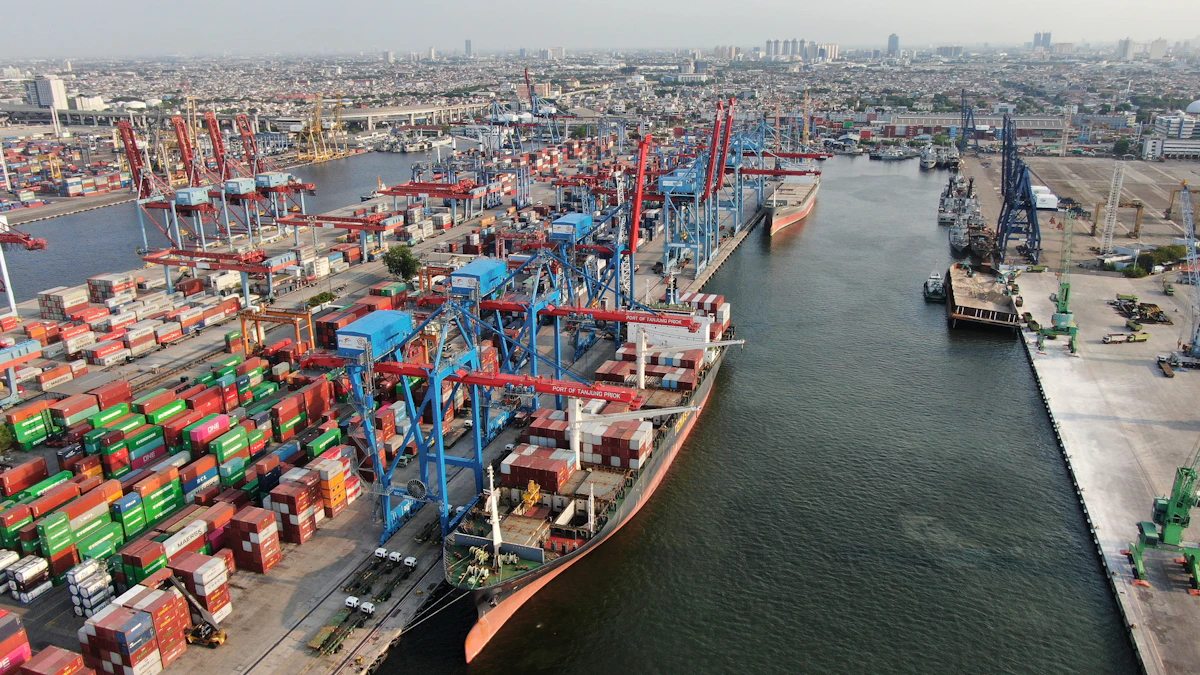
Per diem and demurrage are the most avoidable costs in import freight — and the most commonly paid. At $75 to $350 per container per day depending on the ocean carrier and terminal, these charges can add thousands of dollars to a single shipment. Across a year of imports, they represent one of the largest hidden line items in a shipper's landed cost.
The charges are avoidable because they are driven by timing, not by market conditions. A container that gets picked up within free time costs zero in per diem. The same container sitting one day past free time costs $150. Two days past costs $375. The math is brutal and entirely within your control — if your port drayage services are coordinated properly.
This guide explains what per diem and demurrage actually are, why importers keep paying them, and the specific operational steps that eliminate them.
Per Diem vs. Demurrage: What You Are Actually Being Charged For
These two terms are often used interchangeably, but they are different charges from different parties:
Demurrage is charged by the marine terminal for containers that remain in the terminal yard past the allotted free time after vessel discharge. The terminal needs the space. If your container is sitting on their yard because you have not arranged pickup, they charge you for the real estate. Demurrage rates vary by terminal but typically run $75–$200 per container per day after free time expires.
Per diem is charged by the ocean carrier (steamship line) for use of their container equipment beyond the allotted free time. The carrier owns the container. Every day you hold it past the return deadline, they charge you rent. Per diem rates range from $100–$350 per container per day and escalate the longer you hold the equipment.
Free time is the window — typically 3 to 5 business days at most U.S. ports — during which no charges apply. The clock starts when the container is discharged from the vessel (for demurrage) or when it leaves the terminal gate (for per diem). Every day past free time is a billable day.
The combined exposure: A container that sits in the terminal 2 days past demurrage free time and is returned 3 days past per diem free time can accumulate $500–$1,500 in charges on a single move. On 20 containers per month, that is $10,000–$30,000 in avoidable costs annually.
Why Importers Keep Paying These Charges
If per diem and demurrage are avoidable, why do importers keep paying them? The answer is almost always a coordination failure in one of four areas:
1. Drayage not scheduled before vessel arrival
The most common cause. The importer waits for the vessel to arrive, then scrambles to book a drayage truck. By the time the truck is confirmed and dispatched, free time is already burning. A container that could have been picked up on Day 2 does not get picked up until Day 5 — three days of demurrage that did not need to happen.
The fix: Schedule drayage before the vessel arrives. Track the vessel ETA and have a confirmed truck and appointment window ready for the first available pickup slot after discharge.
2. Chassis unavailability at the terminal
Even when a truck is dispatched on time, if no chassis is available at the terminal, the container cannot move. The driver either waits (burning hours-of-service time) or leaves empty. The container sits another day. This is becoming increasingly common in Q2 2026 as front-loading ahead of the July 24 Section 122 expiration compresses chassis pools at LA/Long Beach, Savannah, and Houston.
The fix: Work with a broker who pre-arranges chassis or has relationships with chassis pool operators at your port. A confirmed chassis reservation eliminates the most common same-day failure mode.
3. Customs holds and exam delays
A container flagged for customs examination or a hold due to documentation issues will sit at the terminal regardless of your drayage readiness. The demurrage clock keeps running. Many importers do not realize that certain types of holds — particularly ISF (Importer Security Filing) issues — are preventable with proper advance documentation.
The fix: File your ISF accurately and on time (24 hours before vessel loading at origin). Work with your customs broker to resolve any flags before vessel arrival at the U.S. port. If a container is on hold, having the drayage carrier on standby means you can move it the moment customs releases it — not the next day.
4. Warehouse receiving windows missed
The container gets picked up from the terminal on time, but the warehouse is not ready to receive it. The driver waits, or the delivery is rescheduled. The container is now on your chassis for an extra day. Per diem continues. If the driver returns the container late because of the rescheduled delivery, per diem charges accumulate on the equipment.
The fix: Coordinate your warehouse receiving schedule with your drayage schedule. Your broker should confirm the delivery appointment before dispatching the truck — not after.
Per Diem and Demurrage by Port: What to Expect in 2026
Charges and free time windows vary by port, terminal operator, and ocean carrier. Here is what importers should know at the major U.S. gateways:
LA/Long Beach
The busiest container port complex in the country and the one where per diem and demurrage exposure is highest. Free time is typically 4 business days for demurrage, but this varies by terminal operator (APM, TraPac, Fenix, ITS, LBCT). Chassis availability is tightening as Q2 front-loading compresses pool capacity. The LA/LB port drayage window is extremely time-sensitive — every day of delay costs real money.
Houston
Growing rapidly as a gateway for Gulf and Middle East trade. Barbours Cut and Bayport terminals offer 4–5 days of free time. Chassis availability is better than LA/LB but tightening as Hormuz diversion adds unplanned vessel calls. UP on-dock rail at Barbours Cut provides an intermodal alternative that can reduce terminal dwell time.
Savannah
The Southeast's primary gateway. Garden City Terminal is one of the largest single-terminal operations in the country. Free time is typically 4 days. Norfolk Southern and CSX rail service provides inland connectivity. Savannah's advantage is space — less congested than LA/LB — but per diem rates from ocean carriers are the same regardless of port.
Newark/New York
The most congested East Coast gateway in 2026. APMT terminal running 84+ hour vessel wait times versus 18 hours at Maher. Free time is typically 4 days but effective free time is shorter because vessel discharge delays eat into your window before you can even access the container. Importers routing through Newark need to account for terminal congestion when planning drayage timing.
Seattle/Tacoma
The Pacific Northwest gateway. Volumes are down 29.5% year-over-year as importers shift to LA/LB, which means less congestion and more predictable pickup windows. Free time is standard at 4–5 days. Good option for importers who want to avoid the LA/LB crush while maintaining West Coast access.
How a Freight Broker Eliminates Per Diem and Demurrage
A broker who manages port drayage services properly treats per diem and demurrage as operational failures — not inevitable costs. Here is what that looks like:
Vessel tracking and pre-scheduling. The broker tracks your vessel ETA and schedules the drayage pickup before the ship arrives. The truck and chassis are confirmed. The terminal appointment is booked. When the container is discharged, the pickup happens within free time — not after.
Chassis pre-arrangement. The broker confirms chassis availability at the terminal before dispatching the driver. No chassis, no dispatch — the driver is not sent to wait at a terminal gate with no equipment available.
Customs coordination. The broker communicates with your customs broker to confirm release status before scheduling pickup. A container on customs hold does not get a truck dispatched to it. A container just released gets the next available truck.
Delivery appointment confirmation. The broker confirms the warehouse receiving appointment before the truck leaves the terminal. If the warehouse window moves, the schedule adjusts before the driver is on the road — not after arrival.
Per diem clock management. The broker tracks the ocean carrier's free time window and the equipment return deadline separately. The goal is zero per diem days — container picked up within demurrage free time, delivered to the warehouse, empty returned to the depot within per diem free time.
The Cost of Getting It Wrong vs. Getting It Right
On a single 40-foot container at LA/Long Beach:
| Scenario | Demurrage | Per Diem | Total Extra Cost |
|---|---|---|---|
| Picked up Day 2, returned Day 4 (within free time) | $0 | $0 | $0 |
| Picked up Day 6, returned Day 8 (2 days late each) | $300 | $500 | $800 |
| Picked up Day 8, returned Day 11 (4+ days late) | $750 | $1,200 | $1,950 |
On 15 containers per month with an average 2-day overage, that is $12,000/month — $144,000/year — in charges that proper drayage coordination eliminates entirely.
How Alliance Manages Port Drayage to Eliminate These Charges
Alliance Freight Solutions is a licensed non-asset freight broker (MC-1607949, DOT-4177688) specializing in port drayage services for U.S. importers at LA/Long Beach, Houston, Savannah, Newark, Seattle/Tacoma, and Miami.
We treat per diem and demurrage as a zero-tolerance metric. Every drayage move is scheduled against the vessel ETA, chassis availability is confirmed before dispatch, and delivery appointments are locked before the truck leaves the terminal.
For importers currently paying per diem on a regular basis, the savings from switching to a broker who manages the timing properly often exceed the brokerage fee within the first month.
Published by Alliance Freight Solutions | April 13, 2026
Sources: C.H. Robinson — April 2026 Freight Market Update, J.M. Rodgers — April 2026 Freight Market Update, Cole International — New Shipping Surcharges April 2026